Why I Built Menujo: The Story Behind the Platform
Key Takeaway
The origin story of Menujo: built by a software engineer after watching restaurant owners struggle with reprint costs, stale menus, and pricey QR tools.
TL;DR: Quick Answer
I built Menujo after spending two years watching local restaurant owners struggle with the same set of problems: recurring reprint costs for menu cards that went stale within weeks, QR menu platforms charging monthly fees for features a small restaurant doesn't need, and tablet menu setups that broke, got stolen, and required charging routines staff hated. The existing options were either overpriced or under-built. I'm a software engineer; I built the thing I'd want my favorite restaurant to use. The free plan is genuinely free forever; the $7/month plan has no commission, no per-order fee, no cap on menu views. Menujo is my answer to a market that's been overcomplicating digital menus for too long.
How This Started
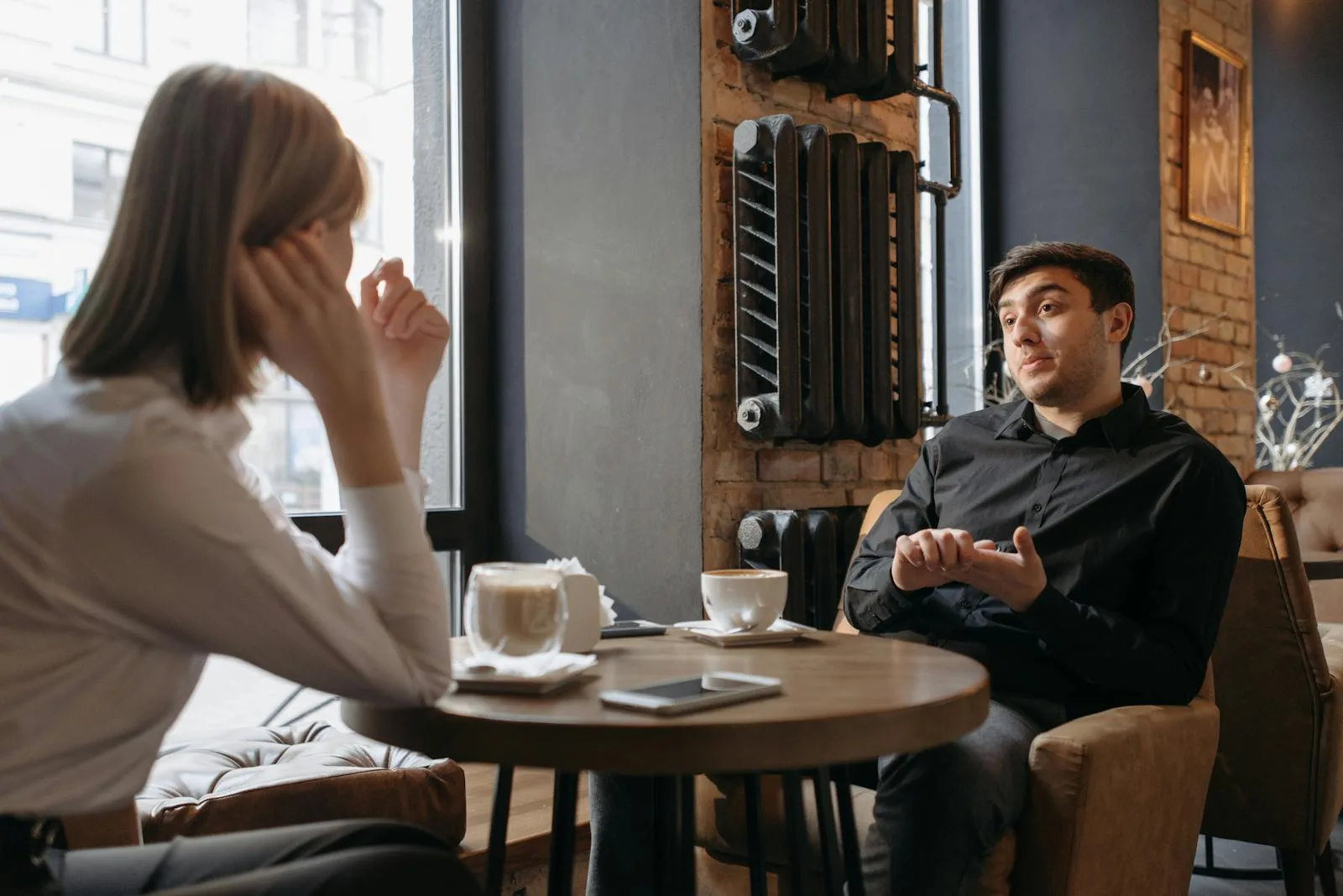
It's 2023. I'm sitting in a friend's café, watching the manager apologize to a Spanish tourist who can't read the printed Arabic menu. The tourist orders coffee, gives up on food, leaves. The manager sighs and says this happens five times a day.
I ask why he doesn't use a digital menu he could publish in more than one language. He shows me his quote from MenuTiger: $46/month for the Advanced tier. Annual cost on monthly billing: $552. For a small café doing maybe 100 covers/day. Plus there's GloriaFood, FineDine, Toast, each shipped with features the café will never use (online ordering, kitchen display, multi-location franchise tooling).
The closest cheap option is Menubly at $9.99/month, but the café tested it and it was not the right fit. The free plan from QR Tiger makes a view-only QR menu from an uploaded PDF, JPEG, or PNG file of the menu.
So the manager prints another stack of paper menus. $300 every six weeks. $2,600/year. Plus he's back to the same problem: when he changes the price of a coffee, the printed menu lies until the next reprint.
I went home that night and started building.
The Problems I Wanted to Solve
After conversations with restaurant owners across Dubai and other cities, and remote operators in the US and Europe, four problems kept coming up:
1. Reprint costs are ruinous for small operators
The math is brutal. For example, if a 50-table casual restaurant prints menus quarterly at $300 to $500 a run, that's $1,200 to $2,000 a year. Add specials cards, drink lists, and kid menus, and the total climbs further, on paper that's out of date within weeks. A platform that charges too much makes the savings marginal. The math has to work, otherwise the operator goes back to paper.
2. The menu UX optimized for tablets, not phones
Older platforms were built when iPad menus were the trend. Phone-first design was an afterthought. Menus loaded slowly on 4G, photos blurred when zoomed, dietary filters didn't work on small screens. Customer phones are the access mechanism in 2026, not venue tablets, but the products didn't catch up.
3. Multilingual was sometimes a premium-tier feature
Tourist-zone restaurants (anywhere with international travelers: Dubai, Bali, Barcelona, Cancún) need several languages just to function. Some platforms gated multiple languages behind higher-priced tiers. The cost of multilingual was effectively a premium for being on a tourist street, which felt backwards. Menujo does not translate. Operators write each language themselves, either inside each item or as one menu per language, and the diner page renders right-to-left scripts such as Arabic correctly.
4. The free tiers were trial-grade, not actually free
"Free plan" with a 7×7 item cap (MenuTiger). Free plan with no analytics. Free plan limited to 100 orders/month. The market told operators "here's free!" then handed them a hostage situation. I wanted a free tier that was actually free: usable forever for an independent café or food truck, one menu with up to 50 items, and no expiry.
What I Actually Built
The product is intentionally small in scope. Menujo displays digital menus. It does not provide online ordering, kitchen display, payments, inventory, or POS features.
Free plan
One menu with up to 50 items across 10 categories, a photo on every item, unlimited views, unlimited updates, PNG QR downloads, a logo, and 7 days of analytics. It does not expire. The public page includes a Made with Menujo branding.
Pro at $7/month or $70/year
Up to 10 menus with 250 items and 50 categories each, 60 days of analytics, themes, custom colours, cover images, grid or list layout, spreadsheet import and CSV export, SVG QR downloads, optional branding removal, and priority email support.
Business at $12/month or $120/year
Up to 100 menus with 1,000 items and 100 categories each, 10 folders, and 90 days of analytics. Menujo does not currently ship custom domains or multi-user accounts as public product features.
Free tools that are not gated
The QR generator, menu pricing calculator, image optimizer, menu digitizer, and UTM builder are available without a Menujo account.
What I Got Wrong (And What I'm Still Iterating)
Building this in public means admitting the parts I underestimated:
I underestimated the SEO learning curve
I thought building a good product was the hard part. Three months in, I learned that getting Google to find the product is harder. Topic-cluster hubs, schema markup, internal linking, brand-vs-brand comparison pages, AI Overview optimization: all of these are non-obvious if you're a software engineer with no marketing background. I've been learning publicly, with a lot of trial and error.
I underestimated multilingual complexity
I assumed machine translation would be a quick win. Testing it on real menus changed my mind: proper nouns, regional dish names, and cultural references come out wrong. "Mansaf" should not be translated to "tray of meat"; it should stay "mansaf" with a brief description. Each language pair has its own quirks. So Menujo does not translate. Operators write each language themselves, inside each item or as one menu per language, and the diner page handles right-to-left scripts. Whether to add translation at all is still an open question.
I underestimated how much restaurant operators value photos
I thought a clean menu UI with crisp typography would carry the experience. Operators told me, repeatedly, that photos sell items better than text alone. I rebuilt the photo handling pipeline (compression, lazy loading, thumbnails) twice to get it right.
I underestimated the demand for offline / cached menu access
Restaurant Wi-Fi is unreliable. Customer cell signal is spotty in basement venues, food halls, mall food courts. The menu must load even when connectivity is poor. The fix was making the menu page as light as possible: compressed images, lazy-loaded photos, as little script as we could get away with. There is no offline mode; a menu still needs a connection to load. This took months longer than planned.
Why I Keep Going
Most days, the answer is mundane: build the next feature, fix the next bug, ship the next deployment. But underneath that, two things keep me going:
The conversation with operators
I regularly talk to restaurant owners who tell me specific stories: a customer who read a bilingual menu and ordered their first-ever Levantine meal, a café manager who put his reprint savings toward a new espresso machine, a food truck that rotates its menu faster because it no longer has to reprint cards. These are small stories, but they compound. The platform exists in their workflows, and they remember they're using it because it works.
The honesty I can maintain
I write every comparison page on this site myself. When MenuTiger has a stronger feature than us, the comparison page says so. When a multi-location operator needs a full POS, our /compare/toast-alternative page says Menujo is not that product. This editorial honesty is hard to maintain at venture-funded scale; it's easier as a founder-led product where I'm not optimizing for quarterly growth narratives. I'd rather lose a wrong-fit customer than mislead them and lose them later.
The product gets better
Three years in, the platform is dramatically better than what I shipped on day one. Faster, prettier, more features, better SEO, more trust. Each year compounds. I'm optimistic about year four.
What's Next
The roadmap as of May 2026:
- Localization: a multi-language menu management UI in Spanish, Arabic, French, German, and Turkish for operators in non-English markets.
- More free tools: Menu allergen checker, food cost calculator, profitability matrix calculator, QR A/B test analytics. Each tool earns trust without gating value behind a signup.
- Customer story page: Real restaurants on Menujo, with their permission, sharing how they use the product. The case studies aren't marketing fluff; they're operational decisions other restaurants can learn from.
- Statistics + research: Original surveys of restaurant operators, aggregating responses to publish "State of Digital Menus 2026", the kind of data that earns industry citations and helps operators make better decisions.
If you're running a restaurant and reading this, I'd love to hear from you. support@menujo.com. The next year of the platform will be built around what operators tell us they need.